Type "E" Electrodes for SSQ Plasma Tubes
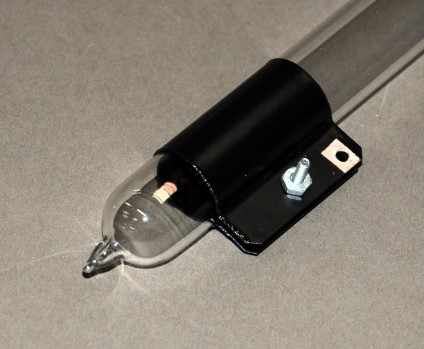
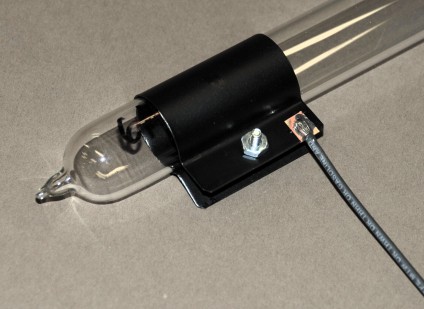
Electrode Types E1 (left) and E1W (right) for the Bill Cheb SSQ-PT Plasma Tube
These are specially treated, heat-dissipating pure copper electrodes for the Bill Cheb SSQ-series of Plasma tubes.
Excessive heat is the most common cause of Plasma tube failure. This type of damage happens when the glass wall of the plasma tube becomes so hot that oxygen gas and water vapor are released from the wall of the tube into the gas mixture. This results in contamination of the gas mixture inside the tube, causing an unwanted color shift in the ionized gas discharge and poor performance, sometimes resulting in amplifier failure.
The process of ionizing the gas in normal operation causes the glass wall of the tube directly under the electrodes to become very hot. Using ordinary bare copper or aluminum electrodes may result in damage to the tube wall due to overheating if high power is applied to the plasma tube. Damage may also result if the electrode area is too small for the power level being used. Due to their relatively poor emissivity, untreated copper or aluminum electrodes do not effectively remove excess heat from the plasma tube.
The "E"-series external
electrodes furnished by Spectrotek Services are especially
designed to absorb heat from the glass wall of the plasma tube
and efficently radiate it away from the tube. Using the "E"
electrodes on your plasma tube should extend the lifetime of
your plasma tube by reducing excess heating.
Spectrotek "E"-series
electrodes are available for all standard Bill Cheb external
electrode plasma tubes. Please specify tube type or
tube diameter in millimeters when ordering electrodes.
Some plasma tubes such as the SSQ-BAT and some Argon filled tubes require that a pair of Side Wires be attached to the electrodes to ensure prompt ignition of the gas in the tube when it is powered on. This prevents possible damage to the output transistor in the amplifier. If you order electrodes with Side Wires, then there is a slight additional charge for the wires.

This web site and all contents including pictures, text and diagrams is Copyright 2012 - 2026 by Ralph M Hartwell.